
MaaS Dynamic Catalogue (MDC)
At a Glance
Section titled “At a Glance”
- Category: Cloud & Marketplace Solutions
- Primary environment: Cloud MaaS Marketplace
- Documentation focus: Design reference
- Maturity: TRL 4 (first release, reported in D6.1 at M20; MaaSAI System 1st Release planned for M24)
- Related architecture docs: Reference Architecture Guide, Environments
Purpose
Section titled “Purpose”The MaaS Dynamic Catalogue (MDC) provides a means for representing the body of knowledge of the MaaS system by utilizing ontologies. It enables adequate description of the assets, services, offerings, capabilities of the MaaS Providers, which makes it possible for MaaS Consumers to search and request desired manufacturing services. The solution consists of the following main implementation components, each fulfilling a dedicated function within the system:
Primary Actors
Section titled “Primary Actors”The D5.2 usage viewpoint defines roles, permissions, constraints, a role-task matrix, and a use case diagram for this solution.
- MaaS Provider: Describe Assets, Describe Services, Provide Services, Provide Offer, Update Service Description, Publish services; constraint: Cannot manage other users (create, edit or delete)
- MaaS Consumer: Search Services, Discover Services, Request Services, Get Service Recommendations, Select Services, Accept/Decline Offer; constraint: Cannot manage other users (create, edit or delete)
- Administrator: Manage User Accounts, Manage Service Directory, Approve User Registration, Validate Services, Approve Services; constraint: Cannot provide manufacturing services
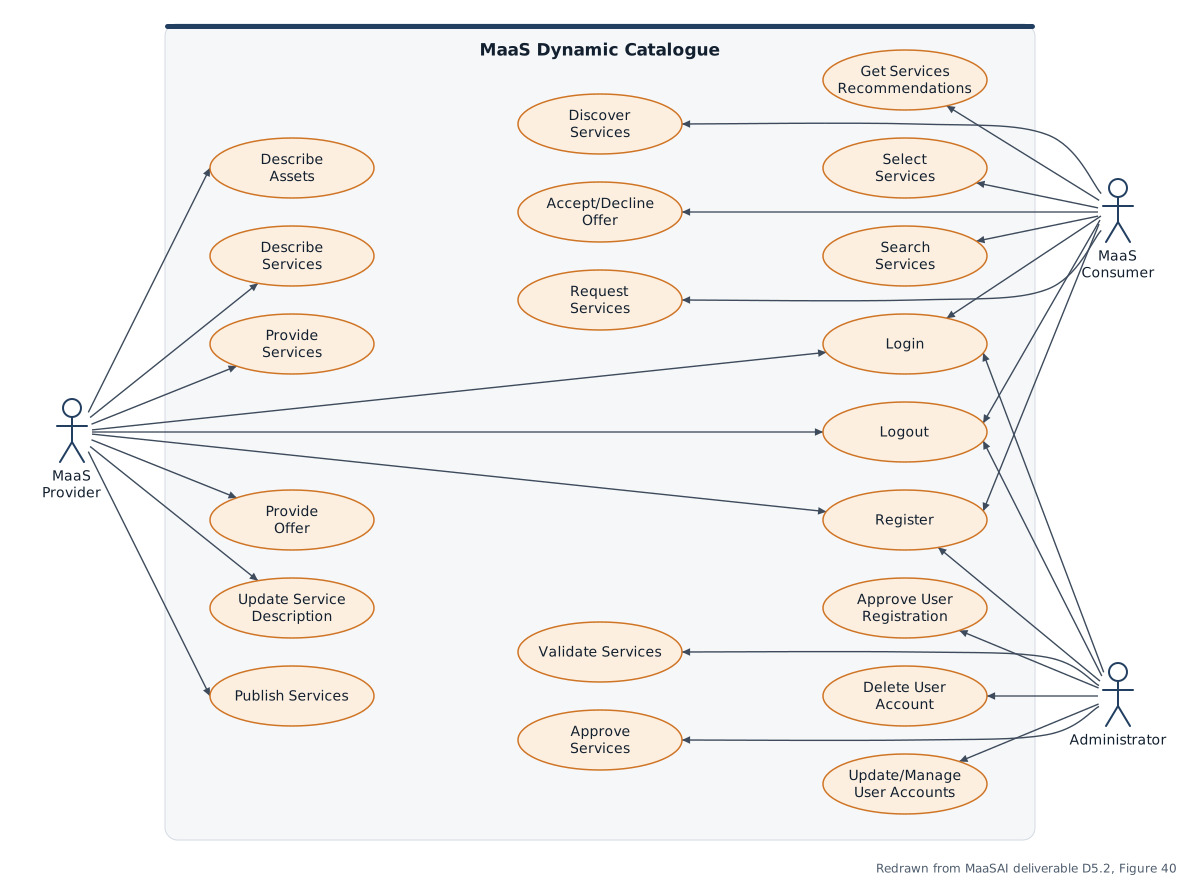
Use-case diagram redrawn from MaaSAI deliverable D5.2.
Functional Components
Section titled “Functional Components”MDC combines security, API gateway, ontology, knowledge-base, recommendation, and monitoring modules to support service publication, discovery, and recommendation workflows. The functional view shows how provider and consumer interactions move through these catalogue components to expose both search results and operational dashboards.
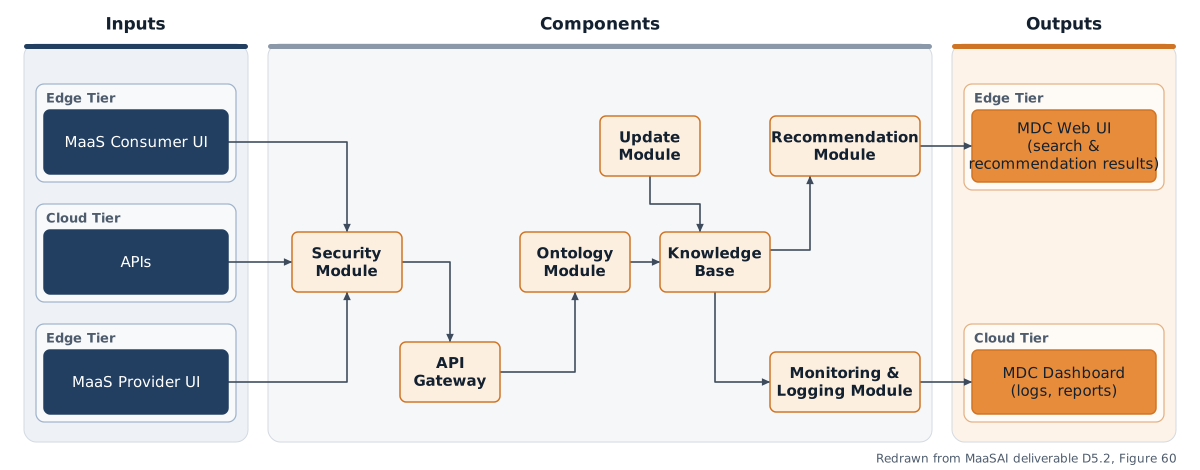
Functional components diagram redrawn from MaaSAI deliverable D5.2.
Design Baseline
Section titled “Design Baseline”• Frontend: The MDC UI is used by the MaaS Providers and MaaS Consumers to describe/publish and search/request manufacturing services respectively. The Administrator is also able to view alerts and performance metrics via dedicated dashboards.
• Backend: This refers to the core components and services of the MDC. This includes the following sub-components: ontology module, knowledge base, recommendation module and update module.
• Data storage: Database backend for storing static and dynamic data. Required for storing and archiving updates regarding events, provider logs, transactional data etc.
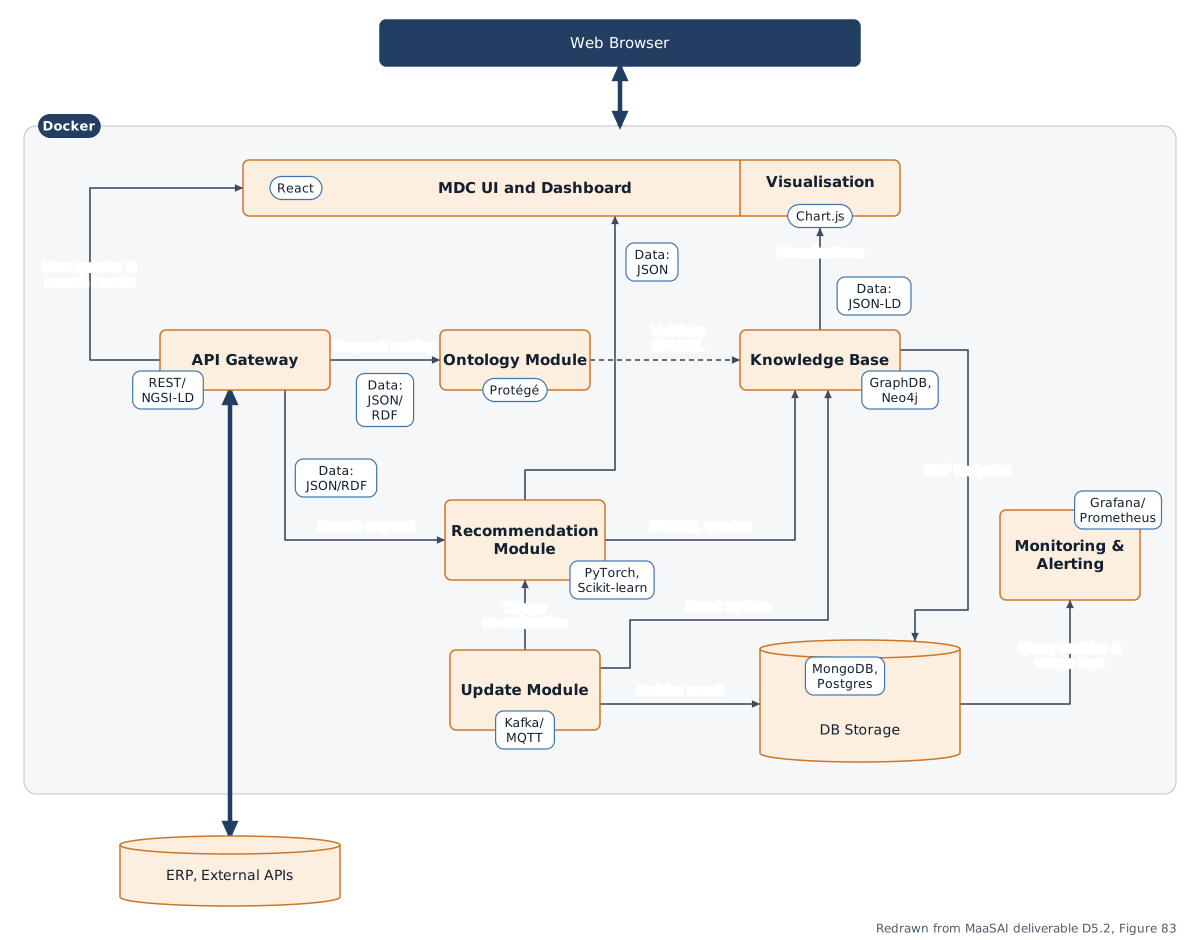
Architecture diagram redrawn from MaaSAI deliverable D5.2.
Technology Stack
Section titled “Technology Stack”MDC is implemented as a Python backend service with a clearly separated semantic processing layer.
| Category | Technology |
|---|---|
| Backend | Python, Django, Django REST Framework (REST APIs and serializer-based validation) |
| Data serialisation | JSON (API input/output), YAML (human-readable provider capability data, read via PyYAML) |
| Semantics | RDF/Turtle for ontological representation, RDFLib for RDF graph generation, SPARQL for retrieval |
| Semantic store | Apache Jena Fuseki as remote SPARQL endpoint |
| Data | PostgreSQL for persistent storage |
| Licence | no separate public licence; follows MaaSAI project-level licensing guidelines |
Integrations & External Dependencies
Section titled “Integrations & External Dependencies”MDC has no user interface of its own: the Cloud MaaS Marketplace (CMM) acts as its UI and entry point for provider service publication and consumer search requests, although this integration is not yet active (the current release works with a mock UI and a REST client). Required dependencies include the Python/Django runtime, RDFLib, Apache Jena Fuseki, PostgreSQL, PyYAML, and Docker/Docker Compose for deployment.
APIs & Interfaces
Section titled “APIs & Interfaces”MDC exposes a REST API intended for consumption by CMM:
GET /api/health— health and availability of the MDC backend serviceGET /api/catalog/filters— vocabulary values for service requests (part families, processes, materials, batch/dimension ranges, certifications)POST /api/provider-publication— publication and validation of provider capabilities (partially implemented)POST /api/search— consumer search returning a list of matching providers (partially implemented)
Functional Flow
Section titled “Functional Flow”MDC exposes no user interface of its own (the Marketplace acts as its UI); the sequence diagrams below illustrate its two core flows:
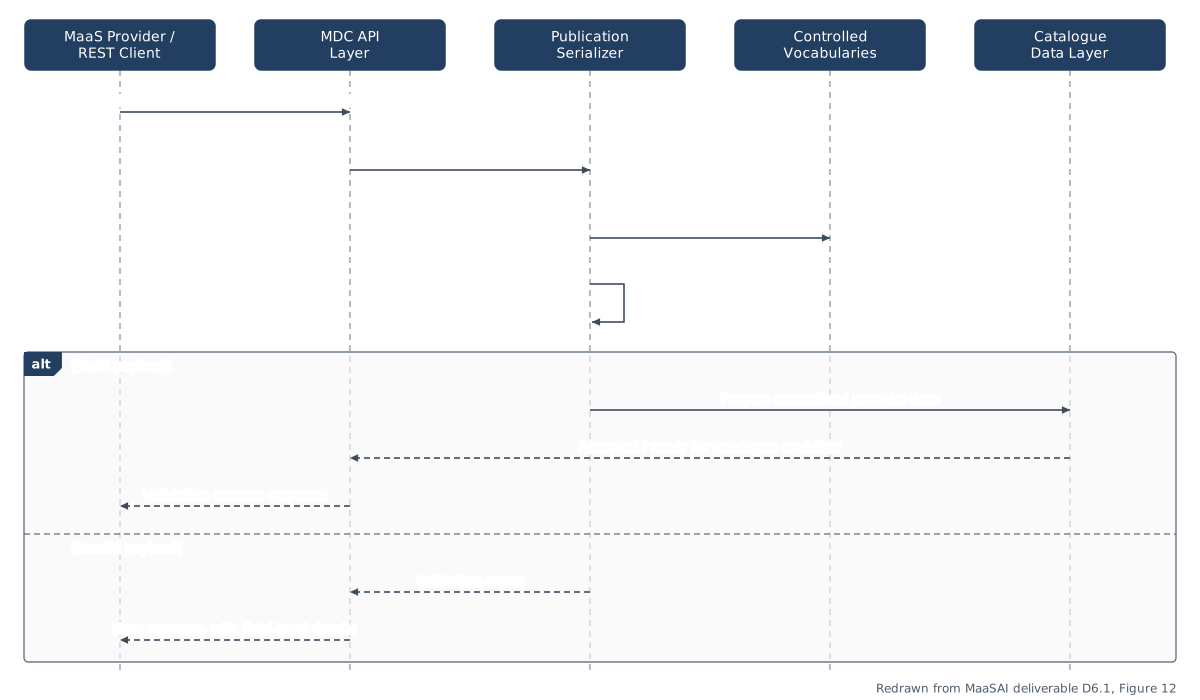
Provider publication validation sequence, redrawn from MaaSAI deliverable D6.1.
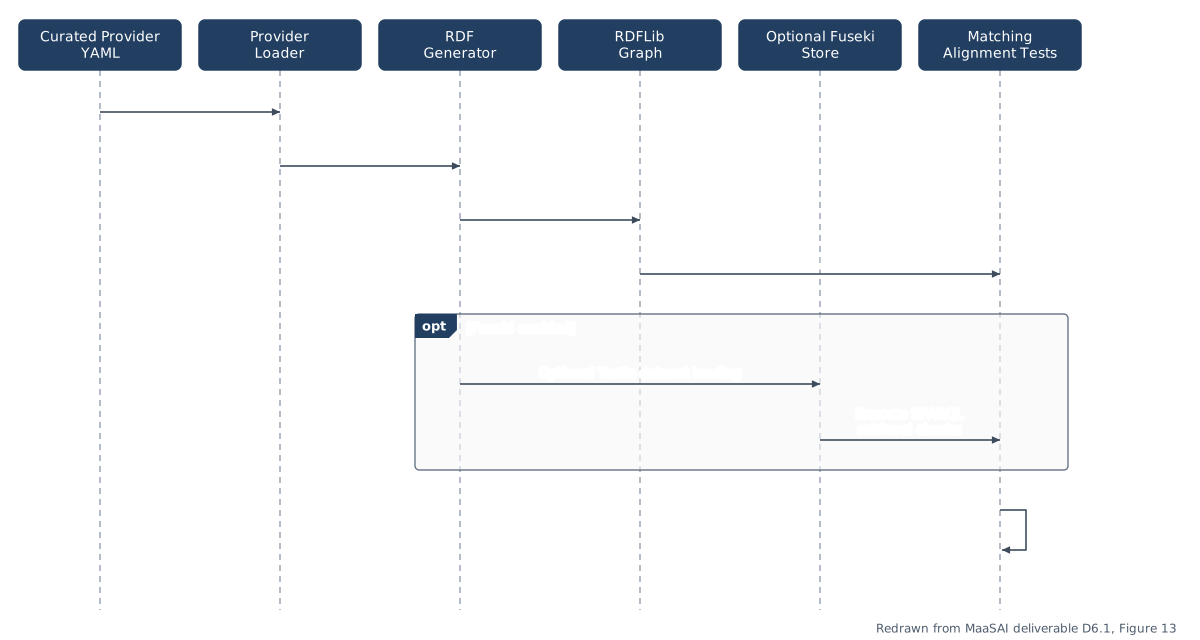
Semantic representation and retrieval sequence, redrawn from MaaSAI deliverable D6.1.
Deployment & Configuration
Section titled “Deployment & Configuration”The current release runs as a Django backend service in the test/laboratory environment of Tampere University, executed via a Python virtual environment and the Django development server; Docker, CI/CD pipelines and a reverse proxy are planned for production deployment.
| Requirement | Minimum | Recommended |
|---|---|---|
| CPU | 2 cores | 4–8 cores |
| RAM | 6 GB | 8–16 GB |
| Storage | 2 GB free | — |
The higher recommended values are mainly for Fuseki. Configuration parameters cover the provider seed YAML file, the provider ID assigned via the Marketplace, the semantic backend selection (local RDFLib/YAML or remote Fuseki), Django module settings, and the Fuseki URL endpoint.